
Pop. 13,363
Emergency Electrician In Atlantic Beach, FL
38.0% of homes here were built before 1980, so older panels and wiring are common.
Free Call · Answered 24/7 · Local Pros Near You
If your breaker box is sparking, keep away from the panel, keep everyone else away too, and do not touch the breakers. Sparking means electricity is jumping a gap it should never cross — an arc fault at a loose connection or damaged bus bar. If there is smoke, flame or a burning smell, leave and call 911. Otherwise call for emergency help: one free call connects you with a local pro who can typically arrive in 30–60 minutes.
Keep your distance first. Visible sparks mean current is arcing across a gap inside the panel, and the metal enclosure and everything near it should be treated as live until a pro proves otherwise. Move children and pets into another room, and do not open the panel door wider, lean in for a look, or try to film the sparks up close.
If you can do it without reaching across the panel, switch off the main breaker / main disconnect from the side, standing clear — then stop touching anything electrical. If there is smoke, visible flame, a strong burning smell or popping that keeps going, do not spend another second inside: get everyone out and call 911. Water never goes near a sparking panel, and neither does a fire extinguisher unless you are trained and the fire is tiny — distance and a fast call are the safe moves.
While you wait, unplug or switch off appliances on the affected circuit from the outlet end if that can be done without going near the panel, and note what was running when the sparking started — a space heater load, a dryer on its 240-volt circuit, a charger. That detail helps the pro go straight to the loaded circuit.
Is This Happening Right Now?
One free call connects you with a local pro who can check it safely — day or night.
Call (800) 555-0100A healthy panel makes no light and no noise. Sparks appear when current leaves its intended path and jumps through air — an Arc fault — and the usual reasons are mechanical: parts that have loosened, worn or got wet over the years. A short circuit, where a live conductor touches a neutral or a ground, can throw visible sparks as the breaker reacts. Older panels protected by a fuse rather than breakers spark the same way when a fuse clip loosens.
Yes — a loose connection is the most common starting point. A breaker that no longer grips the bus bar, or a lug that has worked loose through years of heating and cooling, leaves a tiny gap. Current arcing across that gap superheats the metal, pits the surfaces and makes the gap worse each time, until the arcing is visible as sparks. Backstabbed connection points on outlets can fail the same way on a branch circuit.
Yes. Water intrusion through a damaged service entrance or a leaking roof line corrodes lugs and bus bars, and corrosion raises resistance until connections run hot and arc. Rodent-damaged wiring inside a wall or subpanel can also short and spark where insulation has been chewed away. Storm damage to service equipment — a bent mast or torn weatherhead — often shows up as sparking at the panel days later.
It can contribute. An overloaded circuit draws more current than its breaker and conductors were sized for, and the heat builds exactly at the weakest points — breaker clips and lugs. An EV charger circuit or pool and hot tub circuit added to an older panel raises the total draw for hours at a time, and each should run on a dedicated circuit of its own. Overload alone usually trips the breaker first; overload plus a worn connection is what turns heat into arcing.
Do not reset anything. Flipping a circuit breaker back on into an active fault feeds more energy into the arc. Do not spray water, do not poke at the panel with anything — metal or wood — and do not pull the meter or touch the service drop: the meter base / meter pan and everything outside it is the utility side of the system. Do not cover the panel or hang anything over it, and do not keep a dead circuit alive by feeding it through an extension cord from another room — that hides the fault while the damaged wiring stays live.
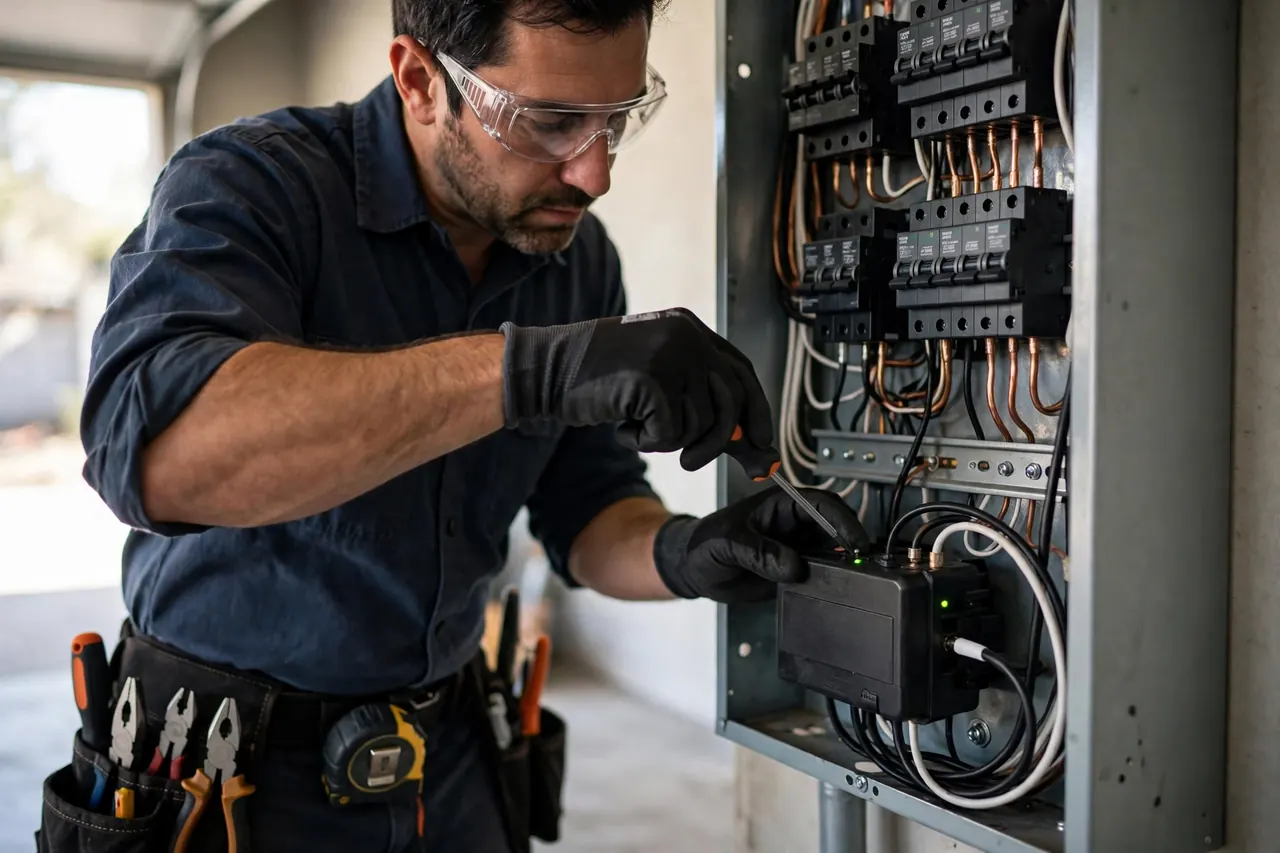
The pro starts with safe isolation / de-energising and lockout/tagout, so the panel cannot be switched back on mid-test. Only then does the inspection begin: the breakers and bus bar are examined for pitting, heat discolouration and melted wire insulation, and connections are checked by torqueing panel connections to the maker's specification.
Testing follows with instruments. A multimeter and clamp meter confirm voltages and find circuits drawing current they should not; thermal imaging / infrared scan shows hot lugs and breakers without touching live parts; circuit tracing / fault finding follows the damaged circuit into the home. Where a fault only shows under draw, load testing reproduces it. If an AFCI (arc-fault circuit interrupter) or GFCI (ground-fault circuit interrupter) device is fitted, its trip history tells the pro whether the arcing is new or long-running. The findings decide the repair — the National Electrical Code (NEC / NFPA 70) sets the standard the work is checked against.
Only the factors can be stated honestly, because nobody can price damage they have not seen. The biggest factor is what the arcing has damaged: a single failed breaker is a small job, while a pitted, heat-damaged bar that breakers can no longer grip can mean a panel upgrade / service upgrade instead. How long the fault has been active matters, because heat damage spreads to neighbouring breakers and conductors. Access matters too, as does whether storm or water damage elsewhere in the service equipment needs repair at the same visit, and whether the local building / permit department requires a permit and inspection before the panel goes back into service.
Now — sparking is one of the clearest call-now signs there is. If flames, smoke or a burning smell are present, leave and call 911 first. In every other case, one free call connects you with an independent local pro who can typically arrive in 30–60 minutes, and the help is backed by 20+ Years Of Experience.
A rural caller comparing notes with an emergency electrician in Acampo will hear the same first steps: power isolated, panel opened, the damaged breaker checked before anything is switched back on. Further south, an emergency electrician in Acton works through the identical sequence on high-desert service equipment, where heat and dust do their own slow damage. Out towards the Mojave edge, an emergency electrician in Adelanto follows it too. The same holds for an emergency electrician in Agoura Hills on the Los Angeles County side, where older hillside panels are the usual setting.
The state page for an emergency electrician in California explains how out-of-hours cover works across the state. The state page for an emergency electrician in Florida explains how it works there too, where storm season drives the same fault in a very different climate.
This guide applies everywhere we serve. These city pages show local facts, reviews and coverage:
38.0% of homes here were built before 1980, so older panels and wiring are common.
58.1% of homes here were built before 1980, so older panels and wiring are common.
27.8% of homes here were built before 1980, so older panels and wiring are common.
Still not sure what is happening at your home? Call and describe it. A real person answers, day or night, and the call is free.
Reviewed By Hamza
Master Electrician & Emergency Power Restoration Specialist
Hamza is a master electrician and emergency power restoration specialist with extensive field experience resolving critical residential and commercial electrical hazards across California, Florida, and Texas. He specializes in thermal arc-fault diagnostics, emergency panel replacements, storm-damaged service mast repairs, and whole-home surge mitigation to protect properties from electrical fires and extended outages.
Updated October 30, 2026
If your power problem cannot wait, one free call connects you with a local pro — 24/7.
Call (800) 555-0100Free call · Open now · 24 hours a day, 7 days a week
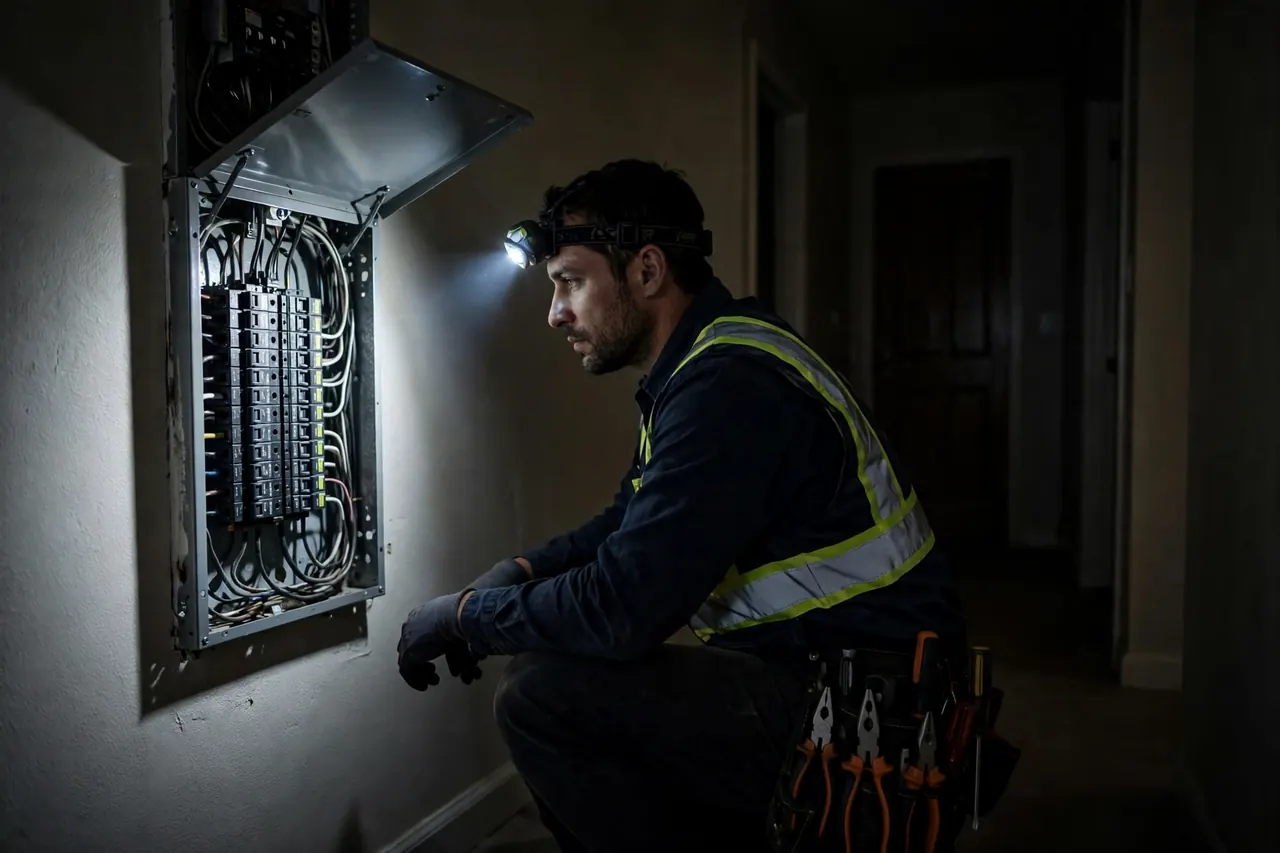
A plain-English emergency guide: what it means, how urgent it is, and what a pro checks first.
7 Min Read · Updated October 30, 2026
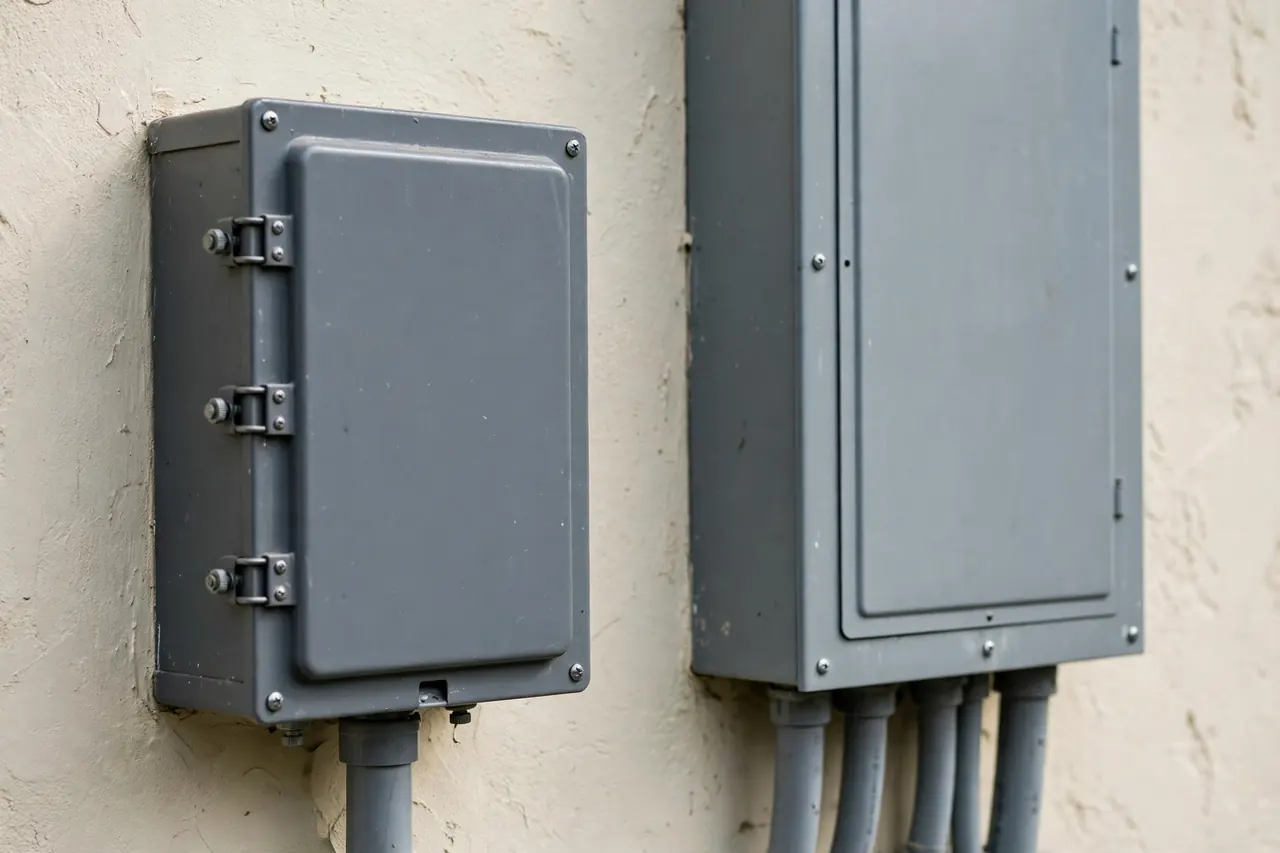
A plain-English emergency guide: what it means, how urgent it is, and what a pro checks first.
7 Min Read
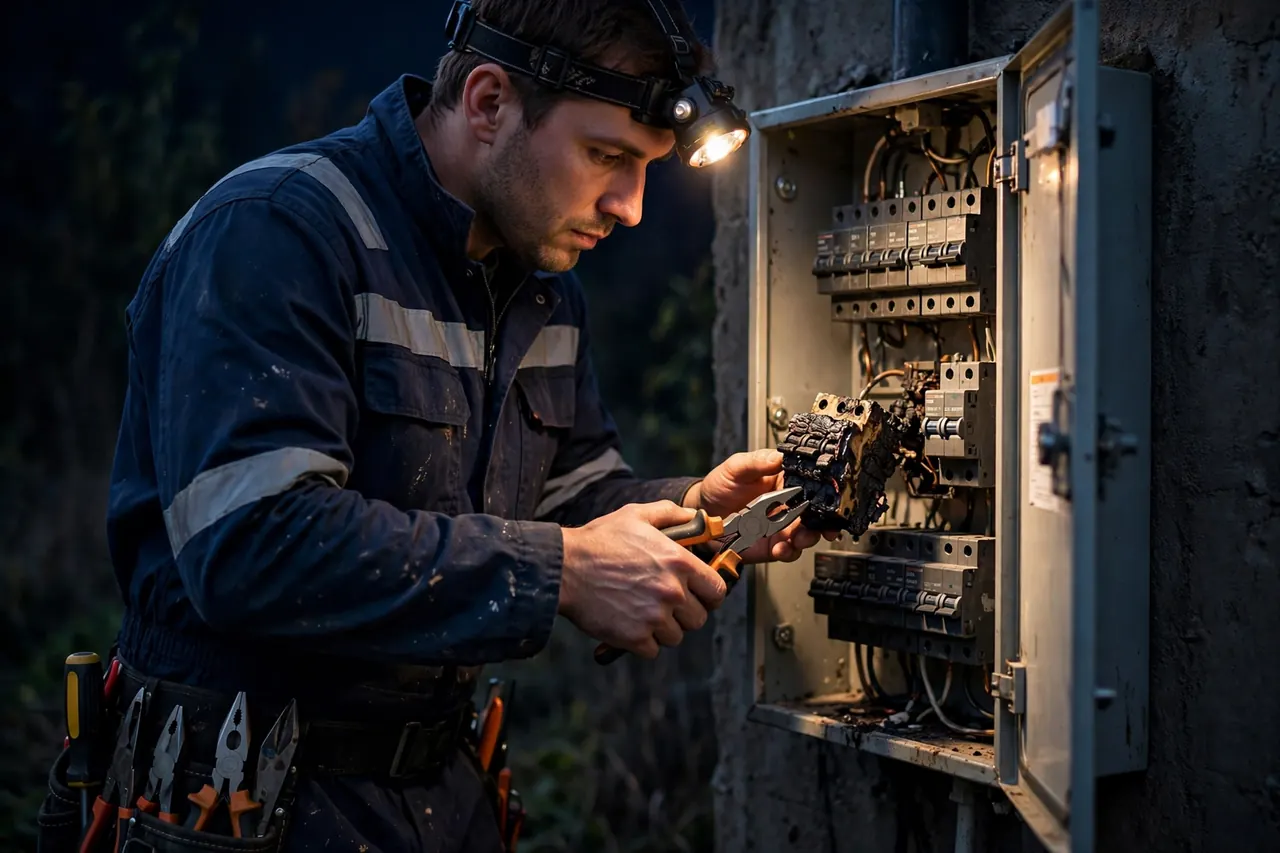
A plain-English emergency guide: what it means, how urgent it is, and what a pro checks first.
7 Min Read