
Pop. 41,705
Emergency Electrician In Altadena, CA
87.7% of homes here were built before 1980, so older panels and wiring are common.
Free Call · Answered 24/7 · Local Pros Near You
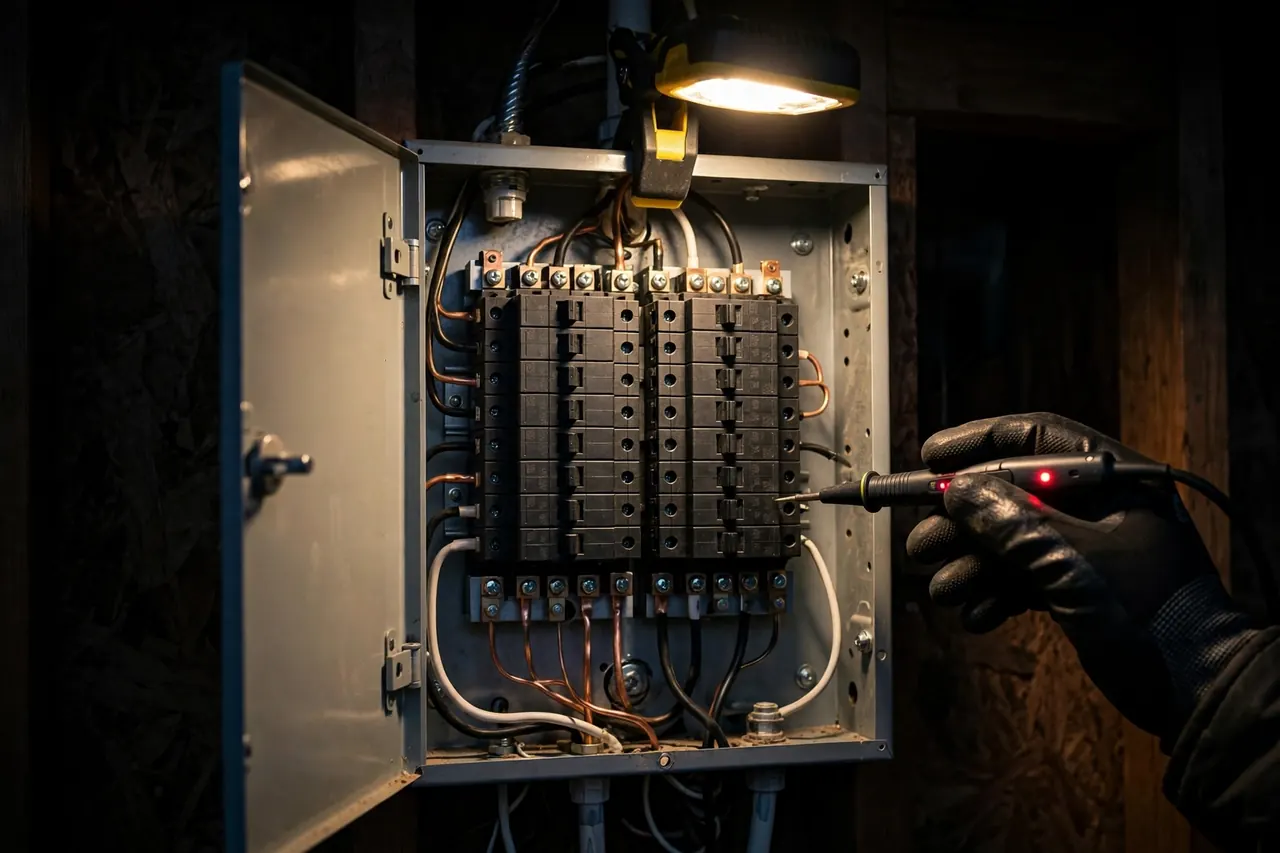
A buzzing electrical panel is worth taking seriously: a faint hum up close can be normal, but loud buzzing, crackling or sizzling usually means a breaker, bus connection or lug is loose, worn or arcing under load. Turn off heavy appliances, keep the panel cover on, and do not ignore a sound that grows with load. Buzzing with heat, smell or flickering lights means call tonight.
A faint hum heard only with your ear close to a closed panel can be normal; a buzz you can hear across the room is not. Sound from an Electrical panel / breaker panel means something inside is vibrating — a breaker under load, a loose part, or a contact not seating cleanly. The louder and rougher the sound, the more seriously it should be taken.
Volume and companions matter more than the buzz alone. A steady, soft hum with no heat, smell or flicker sits at one end; crackling, sizzling, popping, or sound joined by a warm cover, burning smell or dipping lights means call tonight.
Is This Happening Right Now?
One free call connects you with a local pro who can check it safely — day or night.
Call (800) 555-0100Different sounds point to different faults, though only testing confirms which. A loud buzz from one breaker often means that Circuit breaker is overloaded, failing internally, or seated poorly on the Bus bar. Crackling or sizzling suggests an Arc fault — current jumping a gap at a Loose connection — and arcing destroys metal and heats insulation with every cycle. A hum that changes when big loads start may be plain vibration, which is why pattern notes help.
Because heavy loads draw heavy current, and current is what stresses a weak contact. A 240-volt circuit feeding a dryer or air conditioner pulls far more than lights do, so a tired breaker quiet at breakfast can buzz loudly during laundry. An EV charger circuit can do the same for hours. If the sound tracks one appliance, note which — it narrows the pro's first tests.
It usually means arcing, and arcing means call tonight. Unlike a hum, crackling is irregular — it pops, spits and changes — because current is jumping a gap instead of flowing through solid metal. Each jump pits the contact and throws heat into surrounding parts. Keep away from the panel, do not open the cover, and do not keep resetting anything. If crackling comes with smoke, sparks or a strong smell, leave and call 911 / local fire department.
Reduce the load first: switch off the large appliances running when the sound grew, and see whether the buzz eases. If one breaker is clearly the source and the cover is cool and dry, leave that breaker off as a holding step. If the panel is hot, smells of burning, crackles, or the main breaker area is the source, keep clear entirely and treat it as an emergency.
Do not remove the panel cover, press on breakers to quiet them, or spray anything near the panel. Homeowners served by an emergency electrician in California get the same advice. So do readers contacting an emergency electrician in Florida. The advice is simple: unload the panel, then let testing find the fault. Water near a buzzing panel raises the risk sharply — Water intrusion is a stop-and-call sign on its own.
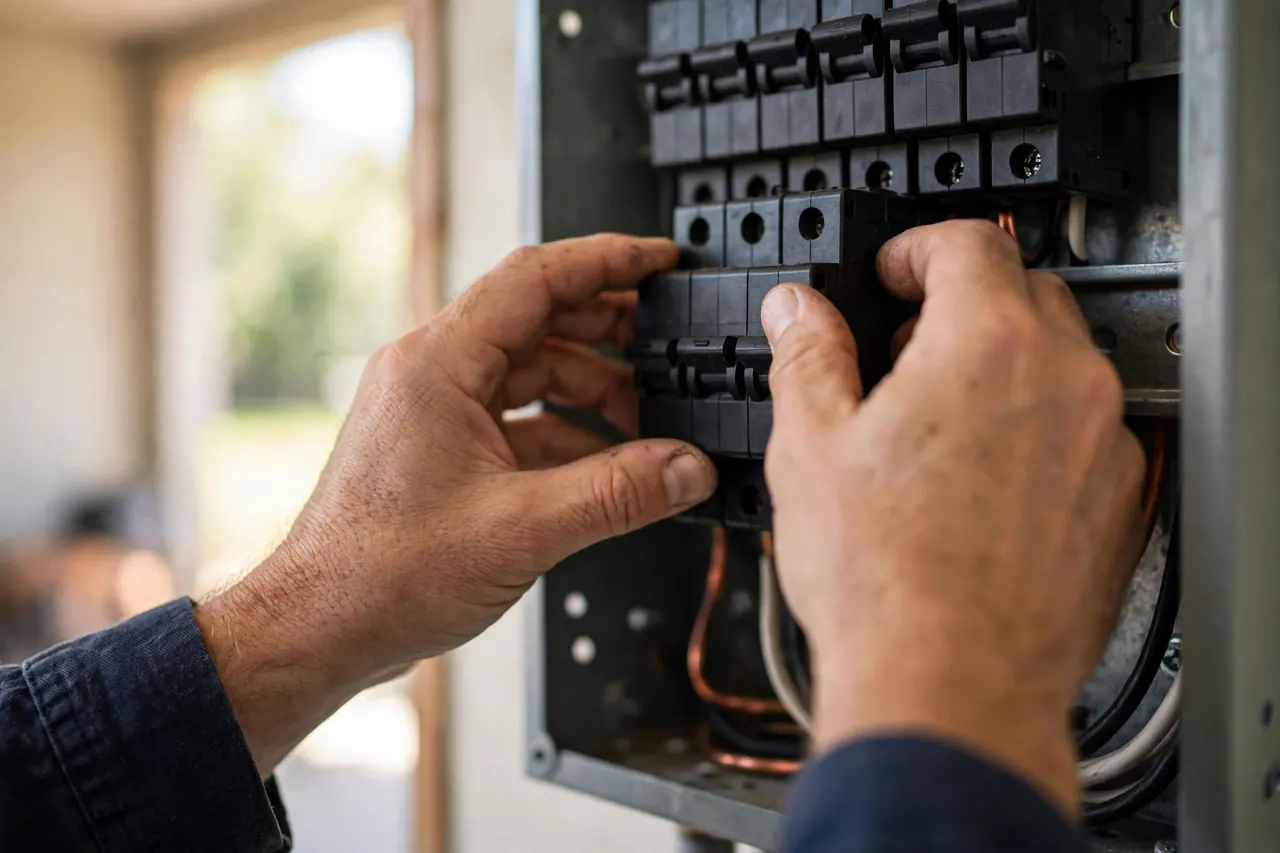
The usual causes are age, load and connection quality. Breakers wear: internal contacts pit, springs weaken, and the clip that grips the bus loses tension, so it vibrates and heats under current. An Overloaded circuit keeps a breaker near its limit for long stretches, accelerating that wear. Corrosion (bus bars, lugs, outdoor equipment) adds resistance at joints — and resistance means heat and movement where parts should sit still.
Yes — a loose joint can buzz, heat and arc for a long time without drawing enough current to trip a breaker. Tripping responds to overloads and short circuits; a high-resistance joint may limit current while turning energy into heat at the joint itself. That is why a buzzing panel with no tripped breaker is not a cleared panel. An AFCI (arc-fault circuit interrupter) can respond to some arcing patterns, but many circuits predate that protection.
Yes — it follows the same rules as the main panel, because it holds the same parts: breakers, lugs and buswork. Buzzing from a garage or basement unit points to the same shortlist — a failing breaker, a loose lug or feeder connection, or an Overloaded circuit. The feeder to the main panel also gets checked — a fault at either end can show as noise at the other.
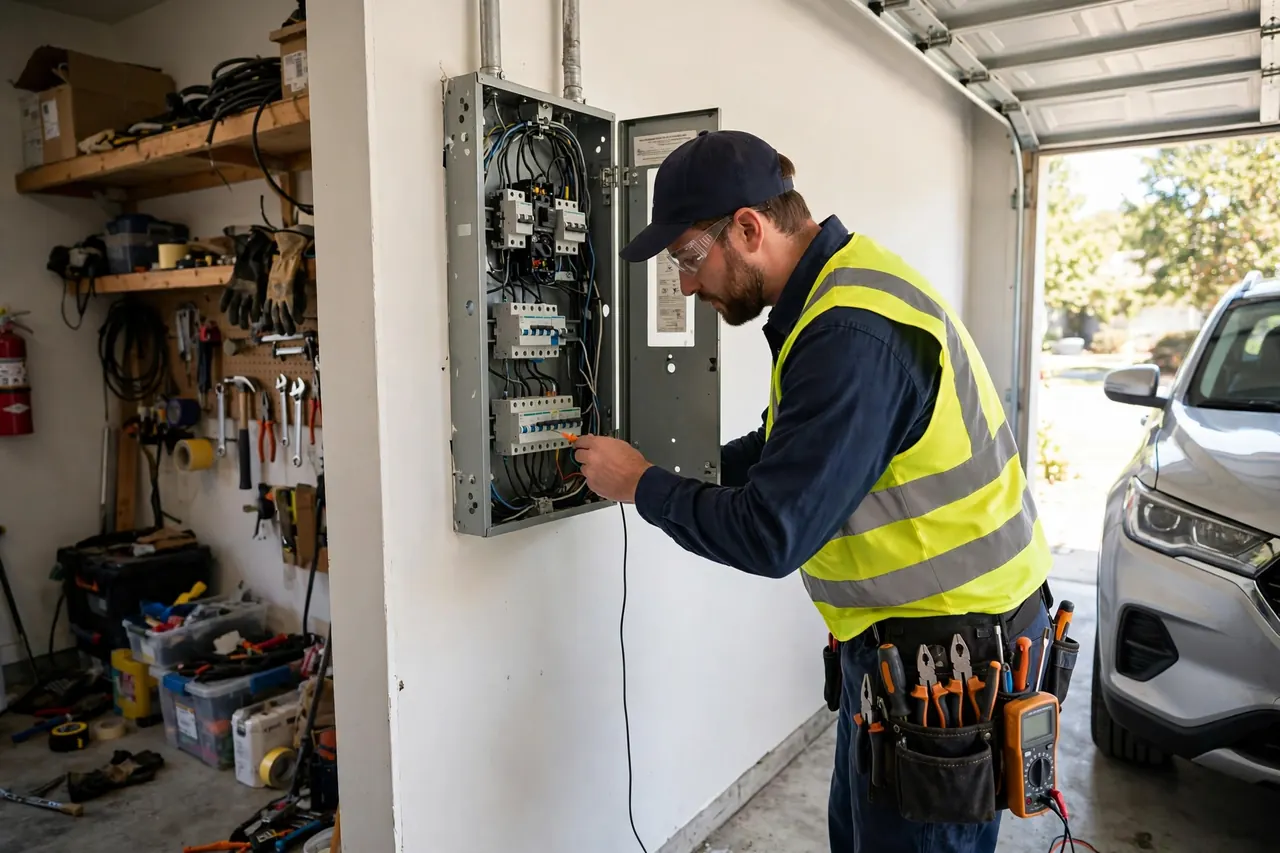
A pro listens first with the cover on, noting which loads change the sound, then isolates power before opening anything. Safe isolation / de-energising and Lockout/tagout come first, because the Main breaker / main disconnect area stays live even with breakers off. Inside, the pro checks breaker seating, lug tightness through Torqueing panel connections, and signs of heat, pitting or corrosion on the bus.
Measurements follow: a Multimeter checks voltage on each leg and Voltage drop across suspect connections, while a Clamp meter reads each circuit's actual draw. Load testing recreates the buzz conditions, and a Thermal imaging / infrared scan shows which breaker or joint runs hot under load. Work is judged against the National Electrical Code (NEC / NFPA 70). The same sequence is followed by an emergency electrician in Acampo. It is followed by an emergency electrician in Acton too. And it is the sequence used by an emergency electrician in Adelanto.
No honest figure exists before testing — only the factors can be named. One failed breaker is a contained job; heat damage to the bus itself, several worn breakers, or corrosion across the panel widens it considerably. Whether a Dedicated circuit is needed for a load that overstresses one breaker, whether the panel needs replacing, any permit the Local building / permit department requires, and whether the Electric utility (service provider) must disconnect the service all shape the final figure, agreed with the independent pro before work starts.
Call tonight for crackling, sizzling or popping, a buzz that keeps getting louder, any sound with heat, smell, smoke or sparking, and buzzing joined by lights flickering across several rooms. Those patterns point to arcing or unsafe panel parts. One free call connects you with a local pro who can typically arrive in 30–60 minutes — the route an emergency electrician in Agoura Hills call follows as well — so the panel can be unloaded, tested and made safe tonight.
This guide applies everywhere we serve. These city pages show local facts, reviews and coverage:
87.7% of homes here were built before 1980, so older panels and wiring are common.
42.3% of homes here were built before 1980, so older panels and wiring are common.
62.3% of homes here were built before 1980, so older panels and wiring are common.
Still not sure what is happening at your home? Call and describe it. A real person answers, day or night, and the call is free.
Reviewed By Hamza
Master Electrician & Emergency Power Restoration Specialist
Hamza is a master electrician and emergency power restoration specialist with extensive field experience resolving critical residential and commercial electrical hazards across California, Florida, and Texas. He specializes in thermal arc-fault diagnostics, emergency panel replacements, storm-damaged service mast repairs, and whole-home surge mitigation to protect properties from electrical fires and extended outages.
Updated October 30, 2026
If your power problem cannot wait, one free call connects you with a local pro — 24/7.
Call (800) 555-0100Free call · Open now · 24 hours a day, 7 days a week
A plain-English emergency guide: what it means, how urgent it is, and what a pro checks first.
7 Min Read · Updated October 30, 2026
A plain-English emergency guide: what it means, how urgent it is, and what a pro checks first.
7 Min Read
A plain-English emergency guide: what it means, how urgent it is, and what a pro checks first.
7 Min Read