
Pop. 8,972
Emergency Electrician In Aransas Pass, TX
40.9% of homes here were built before 1980, so older panels and wiring are common.
Free Call · Answered 24/7 · Local Pros Near You
An AFCI (arc-fault circuit interrupter) breaker watches a circuit for the ragged electrical pattern of an Arc fault and trips before that arcing can heat nearby material. A standard Circuit breaker reacts mainly to overloads and short circuits, so an arc can continue below its trip level. Repeated tripping is therefore a report to investigate, not a fault to ignore. One free call connects you with a local pro who can typically arrive in 30–60 minutes.
An arc-fault breaker watches the shape of the current on its circuit and trips when that shape matches arcing. The device in the panel is an AFCI (arc-fault circuit interrupter): its electronics separate the sputtering pattern of a dangerous arc from the small, normal arcs made by a switch or a motor starting, and cut power when the pattern looks like a fault.
That job differs from ordinary overload protection. A standard Circuit breaker trips when current runs too high for too long, as with an Overloaded circuit, or rises instantly in a Short circuit. An arc of this kind can sit well below those levels while still heating a single damaged point intensely, which is why arc protection exists as a separate layer inside the Electrical panel / breaker panel.
Is This Happening Right Now?
One free call connects you with a local pro who can check it safely — day or night.
Call (800) 555-0100An Arc fault is electricity jumping across a gap it should never cross. The gap might be a break in a conductor, a nick in Wire insulation, a frayed cord, or a terminal that no longer grips the wire firmly. At the jump point the energy concentrates into intense heat, while the rest of the circuit can keep working normally.
Common starting points include Rodent-damaged wiring, a cord crushed by furniture, a Backstabbed connection that has worked loose, and a screw driven through Non-metallic sheathed cable (NM/Romex) inside a wall. Because the fault is hidden inside a Junction box or behind a Receptacle / outlet, the breaker in the panel is often the first and only warning a homeowner gets.
It keeps tripping because it keeps seeing an arc pattern, and the cause is a real fault until testing proves otherwise. A Loose connection arcing at a device, damaged insulation letting a conductor arc to a box, a shared-neutral wiring error, and a failing appliance with worn motor brushes all produce that pattern. So can a breaker whose sensing electronics have drifted with age.
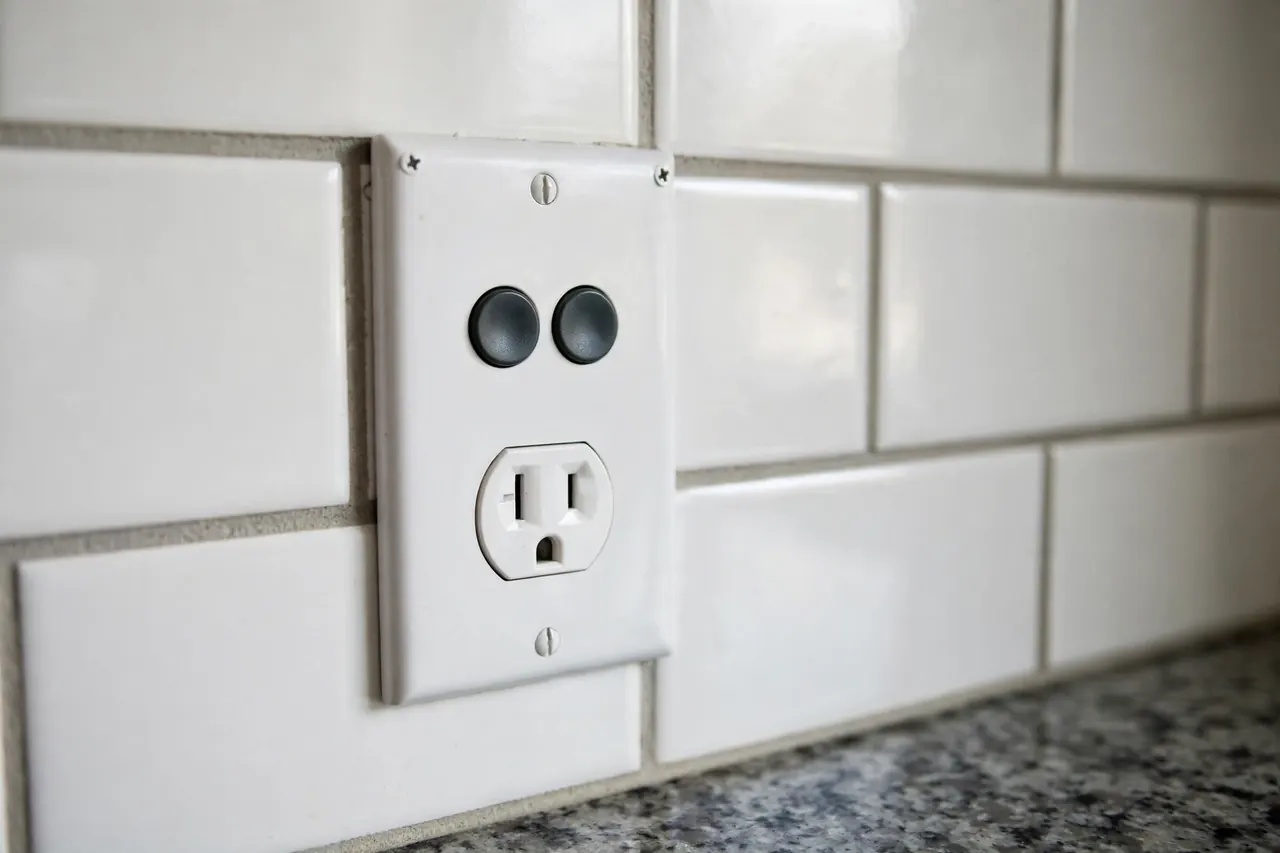
Tripping the moment a device starts points first at that device or its cord. Unplug it, reset the breaker once, and try a simple load on the same Receptacle / outlet. If the substitute runs cleanly, the first device is the suspect and should stay unplugged until checked. If every load trips it, the fault is more likely in the fixed wiring of the circuit itself.
Random tripping usually means the arc appears only under certain conditions: heat, vibration or a particular load. A joint can open microscopically as the circuit warms, then close again as it cools. A Dimmer switch load or a heater cycling on and off can be the trigger. Note what was running each time it trips, because that pattern is exactly what fault-finding follows.
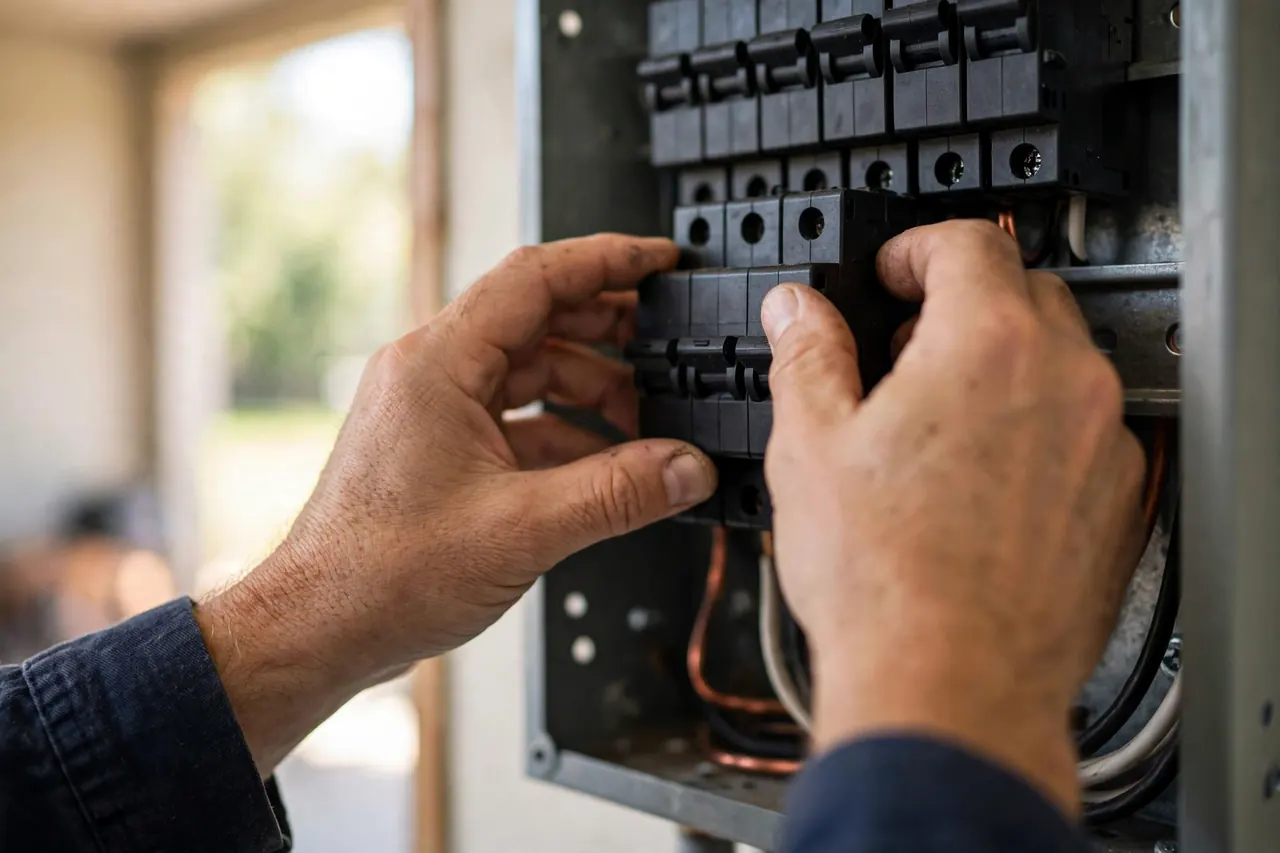
A pro finds the cause by elimination, in a fixed order, starting with Safe isolation / de-energising before any box is opened. First the breaker itself is tested or swapped for a known-good AFCI (arc-fault circuit interrupter), which separates a faulty breaker from a faulty circuit. Then loads are removed one at a time until the trip stops, isolating an appliance from the fixed wiring.
Next the circuit is worked through device by device. A Multimeter checks voltage and continuity at each point, an Insulation resistance tester (megohmmeter) can prove damaged insulation that eyes cannot see, and a Thermal imaging / infrared scan under load shows a joint running hot. Circuit tracing / fault finding maps which outlets and lights actually sit on the circuit, and Load testing confirms whether the trip returns under realistic draw. That sequence is how an emergency electrician in Acampo narrows a whole circuit down to one point of failure. An emergency electrician in Acton works the same way. So does an emergency electrician in Adelanto, with each finding judged against the National Electrical Code (NEC / NFPA 70).
No — they guard against different dangers. A GFCI (ground-fault circuit interrupter) watches for a Ground fault, current leaking off its intended path, and trips to reduce shock risk. An AFCI (arc-fault circuit interrupter) watches for arcing and trips to reduce fire risk from damaged wiring. Some circuits need one, some need the other, and some need both functions together, which is why swapping breaker types without testing is a mistake.
Only the factors can be stated honestly, because the figure depends on where testing finds the fault. A breaker at the end of its life is a short replacement job. A fault in the first outlet on the run is quick to reach, while damaged cable mid-run can mean opening finishes and replacing a section. The age and make of the Electrical panel / breaker panel affect which breakers fit, and whether an Electrical safety inspection of the wider circuit, or an Electrical permit check with the Local building / permit department, is needed also shapes the work agreed with the independent pro before anything starts. Advice from an emergency electrician in Agoura Hills should name the same factors.
It is an emergency when tripping comes with a burning smell, buzzing or sizzling at the panel or an outlet, scorch marks, or a breaker that trips instantly every time and will not hold. Leave that circuit off and unplug what was on it. The statewide page for an emergency electrician in California covers the wider route to help. So does the page for an emergency electrician in Florida. One free call connects you with a local pro who can arrive in 30–60 minutes.
This guide applies everywhere we serve. These city pages show local facts, reviews and coverage:
40.9% of homes here were built before 1980, so older panels and wiring are common.
53.3% of homes here were built before 1980, so older panels and wiring are common.
46.4% of homes here were built before 1980, so older panels and wiring are common.
Still not sure what is happening at your home? Call and describe it. A real person answers, day or night, and the call is free.
Reviewed By Hamza
Master Electrician & Emergency Power Restoration Specialist
Hamza is a master electrician and emergency power restoration specialist with extensive field experience resolving critical residential and commercial electrical hazards across California, Florida, and Texas. He specializes in thermal arc-fault diagnostics, emergency panel replacements, storm-damaged service mast repairs, and whole-home surge mitigation to protect properties from electrical fires and extended outages.
Updated October 30, 2026
If your power problem cannot wait, one free call connects you with a local pro — 24/7.
Call (800) 555-0100Free call · Open now · 24 hours a day, 7 days a week
A plain-English emergency guide: what it means, how urgent it is, and what a pro checks first.
7 Min Read · Updated October 30, 2026
A plain-English emergency guide: what it means, how urgent it is, and what a pro checks first.
7 Min Read
A plain-English emergency guide: what it means, how urgent it is, and what a pro checks first.
7 Min Read