
Pop. 4,221
Emergency Electrician In Bellville, TX
56.5% of homes here were built before 1980, so older panels and wiring are common.
Free Call · Answered 24/7 · Local Pros Near You
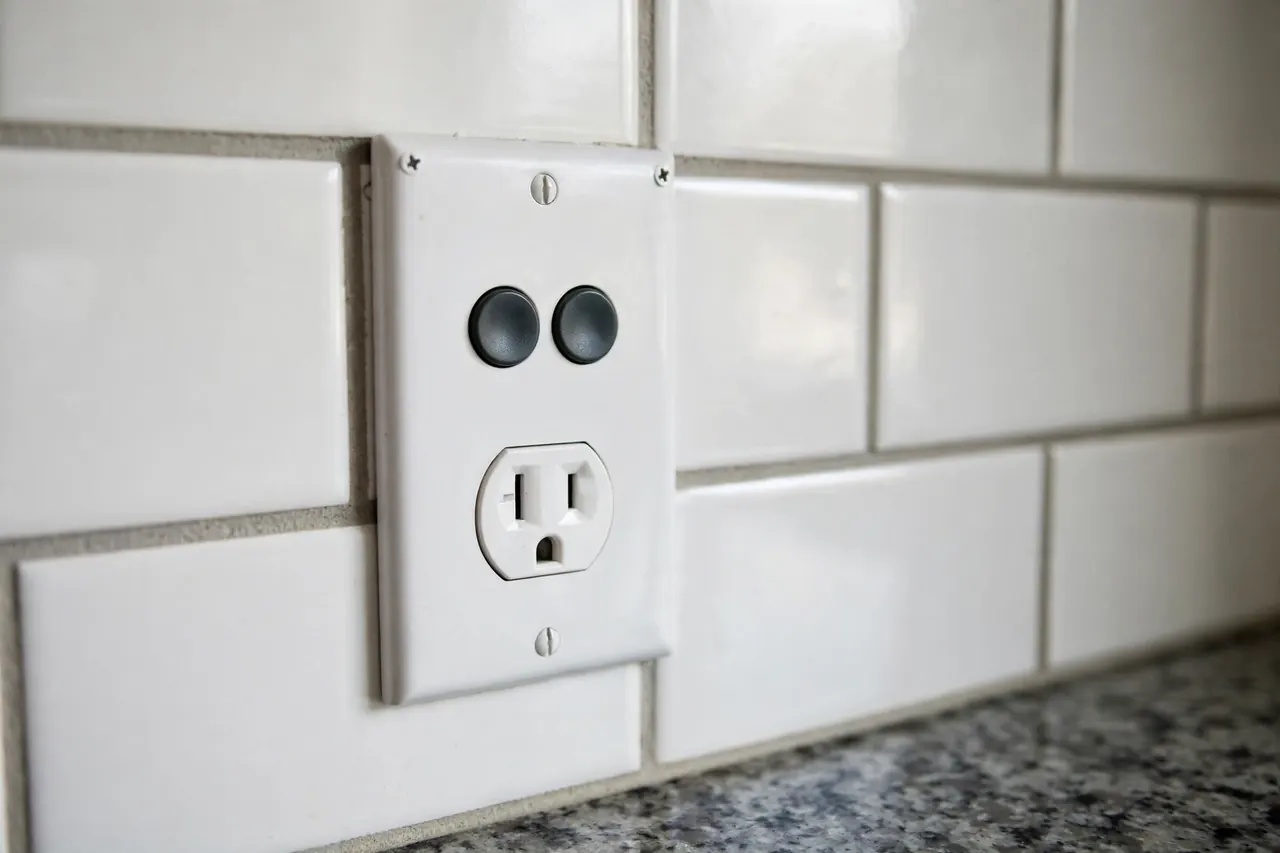
If your GFCI keeps tripping, it is usually doing its job: current is leaking where it should not go, often through moisture in the outlet box or a worn appliance. Unplug everything on the circuit, dry the area, and test once. If it trips again with nothing plugged in, stop resetting it and call — the fault is likely in the wiring itself, not in anything you can unplug.
Because the leak that caused the first trip is still there. A GFCI (ground-fault circuit interrupter) watches the current leaving and returning on a circuit, and it cuts power fast when some of that current goes missing — missing current may be travelling through water, damaged insulation, or a person. Resetting the device does not remove the leak, so the next trip is the device reporting the same fault again. A single trip after a storm or a splash may clear and stay clear. Tripping every time, tripping with nothing plugged in, or tripping at the same moment each day is a pattern, and patterns point to a real fault that testing can find.
Is This Happening Right Now?
One free call connects you with a local pro who can check it safely — day or night.
Call (800) 555-0100Ground fault means current has found an unintended path to ground instead of returning along the neutral wire. That path might be a damp wall, a metal appliance case, wet soil around an outdoor outlet, or a hand. The amount of leaked current can be tiny and still trip the device, because the device is set to react to leaks far below what would trip the breaker in the panel. That sensitivity is the protection: the shock that never happens because power was cut first. It also explains why the fault can be hard to see — a leak too small to spark or smoke can still trip the outlet.
Short circuit is current taking a direct shortcut between hot and neutral, drawing a large surge that the breaker stops. Arc fault is sparking across a damaged or loose point in the wiring, a fire risk that an AFCI (arc-fault circuit interrupter) is built to detect. A ground leak is different again: a smaller escape of current towards ground. The three faults can overlap — damaged wiring can leak, arc, and short at different moments — which is why a pro identifies which one is happening instead of guessing from the trip alone.
Yes, and in kitchens, bathrooms, garages, and outdoor locations it is one of the most common causes. Water intrusion into an outlet box, a cover that no longer seals, or condensation inside a cold exterior wall can give current a damp path to ground. The clue is timing: trips after rain, after a shower fills the room with steam, after a hose is used nearby, or on humid mornings that clear by afternoon. A worn Receptacle / outlet can also trip on its own as its internal sensing parts age, even in a dry room. If the face of the outlet is cracked, discoloured, loose in the box, or warm, treat it as worn out rather than oversensitive.
Unplug everything on the circuit first, then press reset once. If the outlet holds with nothing plugged in, plug items back in one at a time and note which one trips it — that appliance, its cord, or its plug is the likely source. Check the obvious places: a kettle or hair dryer with a damaged cord, a fridge on an Extension cord behind a cabinet, a sump pump with a wet plug. Look in the Electrical panel / breaker panel as well: sometimes the Circuit breaker has tripped too, and the outlet is only reporting a dead circuit. Never keep resetting a device that trips instantly, never tape or hold the reset button, and never swap in a standard outlet to stop the tripping — that removes the protection and keeps the fault. Homeowners in coastal towns often start with an emergency electrician in Acampo when the tripping spreads beyond one room.
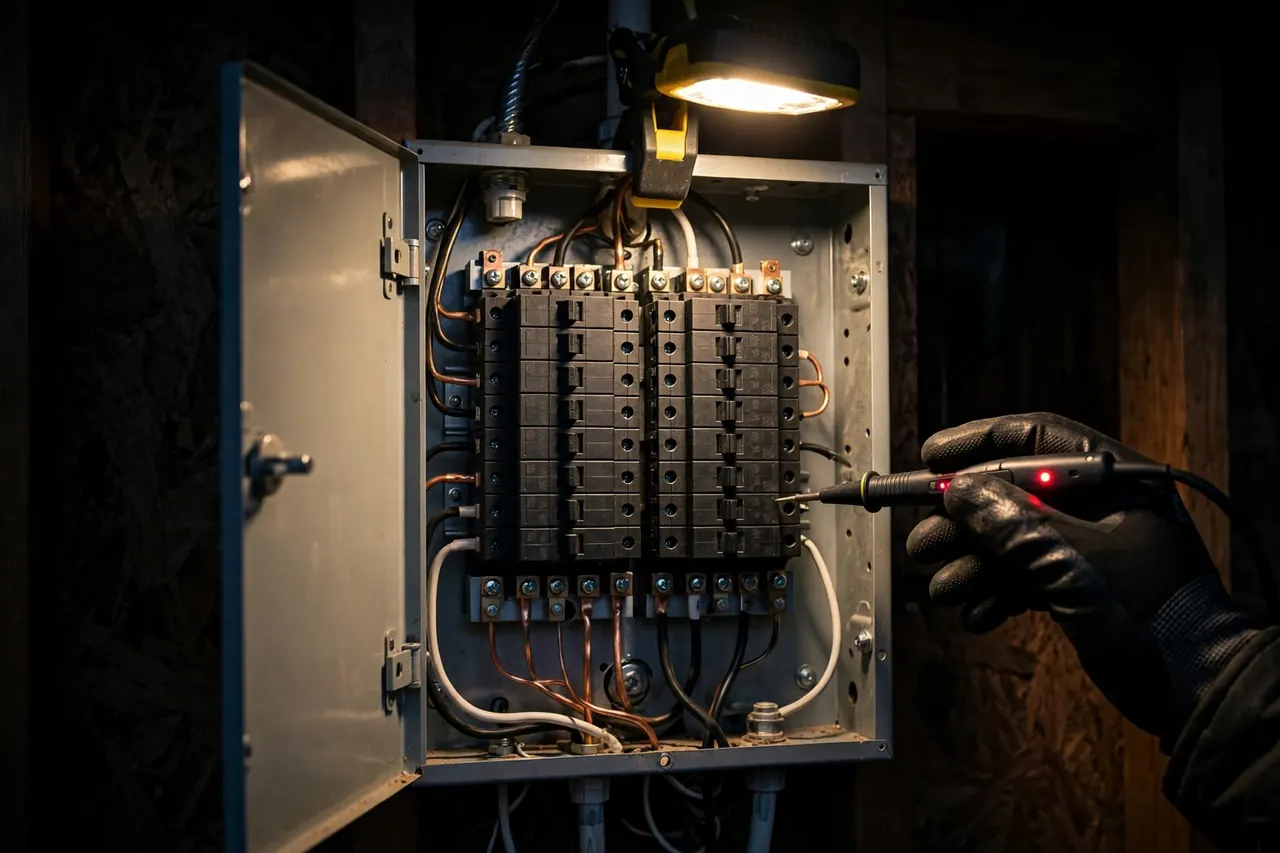
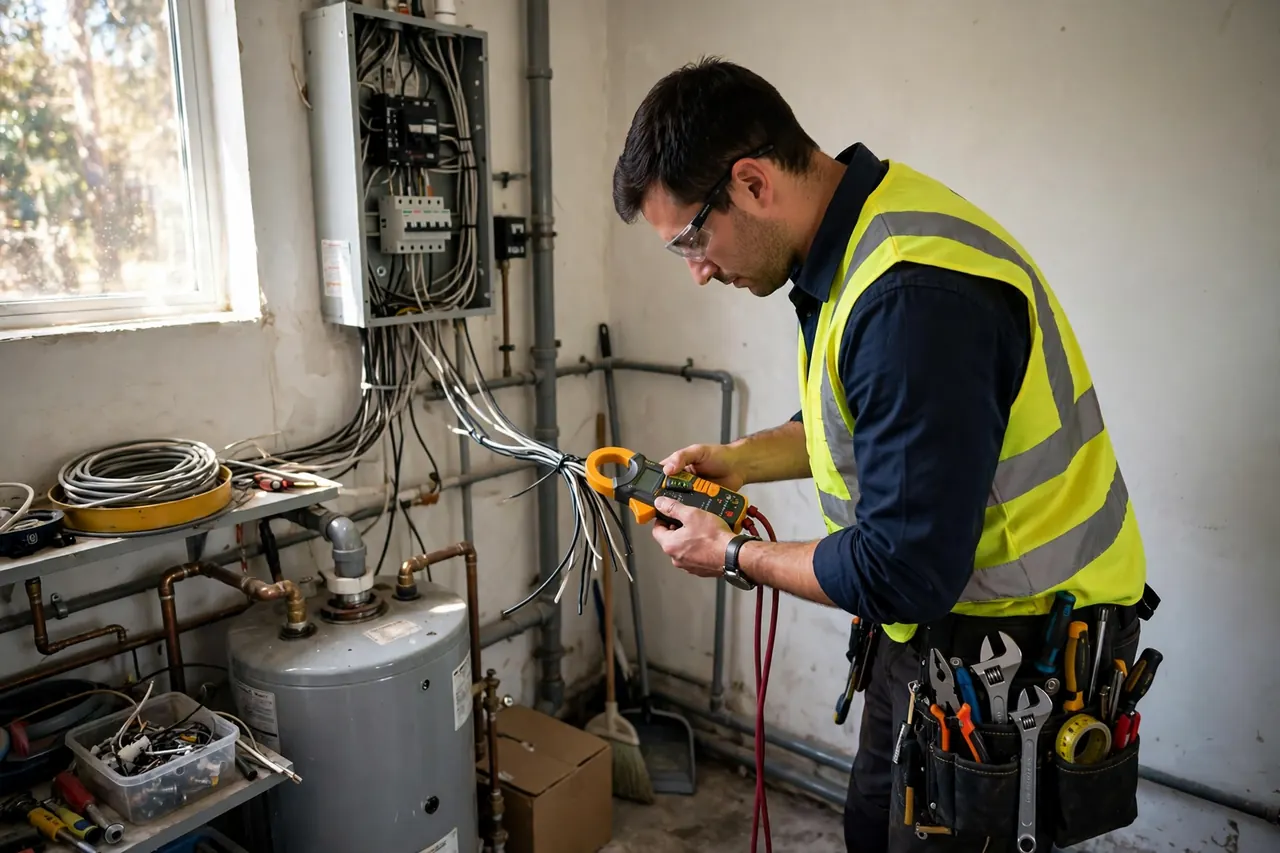
A pro starts with Safe isolation / de-energising and Lockout/tagout, then tests the circuit in sections so the faulty stretch can be separated from the healthy parts. A Multimeter confirms voltage and continuity at the outlet and at the panel. An Insulation resistance tester (megohmmeter) sends a test voltage through the wiring to show whether Wire insulation is breaking down, even when the leak is too small to see. Circuit tracing / fault finding follows the run through each Junction box, checking for a Loose connection, a staple driven through a cable, rodent damage, or moisture sitting in a box. The pro also checks the Grounding electrode / ground rod and the Bonding that ties the system together, because a weak ground path changes how faults behave. Readers comparing notes with an emergency electrician in Acton will hear the same order: isolate, test, narrow down, then repair the section that fails.
Only the factors can be stated honestly, because testing decides which one applies. The cheapest case is a single worn outlet or one faulty appliance, swapped and retested in one visit. Cost rises when the leak sits inside the walls — a damaged cable run, a wet box, or a shared neutral on a circuit serving several rooms takes longer to trace. Access matters too: open walls and an accessible panel are faster than finished ceilings and a crowded Junction box buried behind cabinetry. Work in wet locations may also need a weatherproof cover or a Dedicated circuit for a pump or outdoor load. Any figure is agreed with the independent pro before work starts. That approach is the same whether you reached an emergency electrician in Adelanto or an emergency electrician in Agoura Hills first.
Call the same day if the outlet trips with nothing plugged in, if you see scorch marks, smell burning, hear buzzing from the box, or get any tingle or shock from an appliance, tap, or wet floor. Those signs can mean an Overloaded circuit, heat at a failing connection, or current leaking onto metal parts you touch. Keep people and pets away from the outlet, leave it tripped, and do not use the appliance involved. The National Electrical Code (NEC / NFPA 70) requires this protection in wet locations precisely because these faults injure people quietly. One free call connects you with an independent local pro who can typically arrive in 30–60 minutes. Homeowners statewide can also start from the emergency electrician in California page or the emergency electrician in Florida page, and a pro with 20+ Years Of Experience will still test before naming the cause.
This guide applies everywhere we serve. These city pages show local facts, reviews and coverage:
56.5% of homes here were built before 1980, so older panels and wiring are common.
57.1% of homes here were built before 1980, so older panels and wiring are common.
48.5% of homes here were built before 1980, so older panels and wiring are common.
Still not sure what is happening at your home? Call and describe it. A real person answers, day or night, and the call is free.
Reviewed By Hamza
Master Electrician & Emergency Power Restoration Specialist
Hamza is a master electrician and emergency power restoration specialist with extensive field experience resolving critical residential and commercial electrical hazards across California, Florida, and Texas. He specializes in thermal arc-fault diagnostics, emergency panel replacements, storm-damaged service mast repairs, and whole-home surge mitigation to protect properties from electrical fires and extended outages.
Updated October 30, 2026
If your power problem cannot wait, one free call connects you with a local pro — 24/7.
Call (800) 555-0100Free call · Open now · 24 hours a day, 7 days a week
A plain-English emergency guide: what it means, how urgent it is, and what a pro checks first.
7 Min Read · Updated October 30, 2026
A plain-English emergency guide: what it means, how urgent it is, and what a pro checks first.
7 Min Read
A plain-English emergency guide: what it means, how urgent it is, and what a pro checks first.
7 Min Read